Technology Reveals the Connections between Sleep and Health
At the beginning of the year, our university tour took us to the University of Eastern Finland. On the Kuopio campus, we had the chance to stay overnight in the SmartSleep Sleep Laboratory and take part in sleep research.

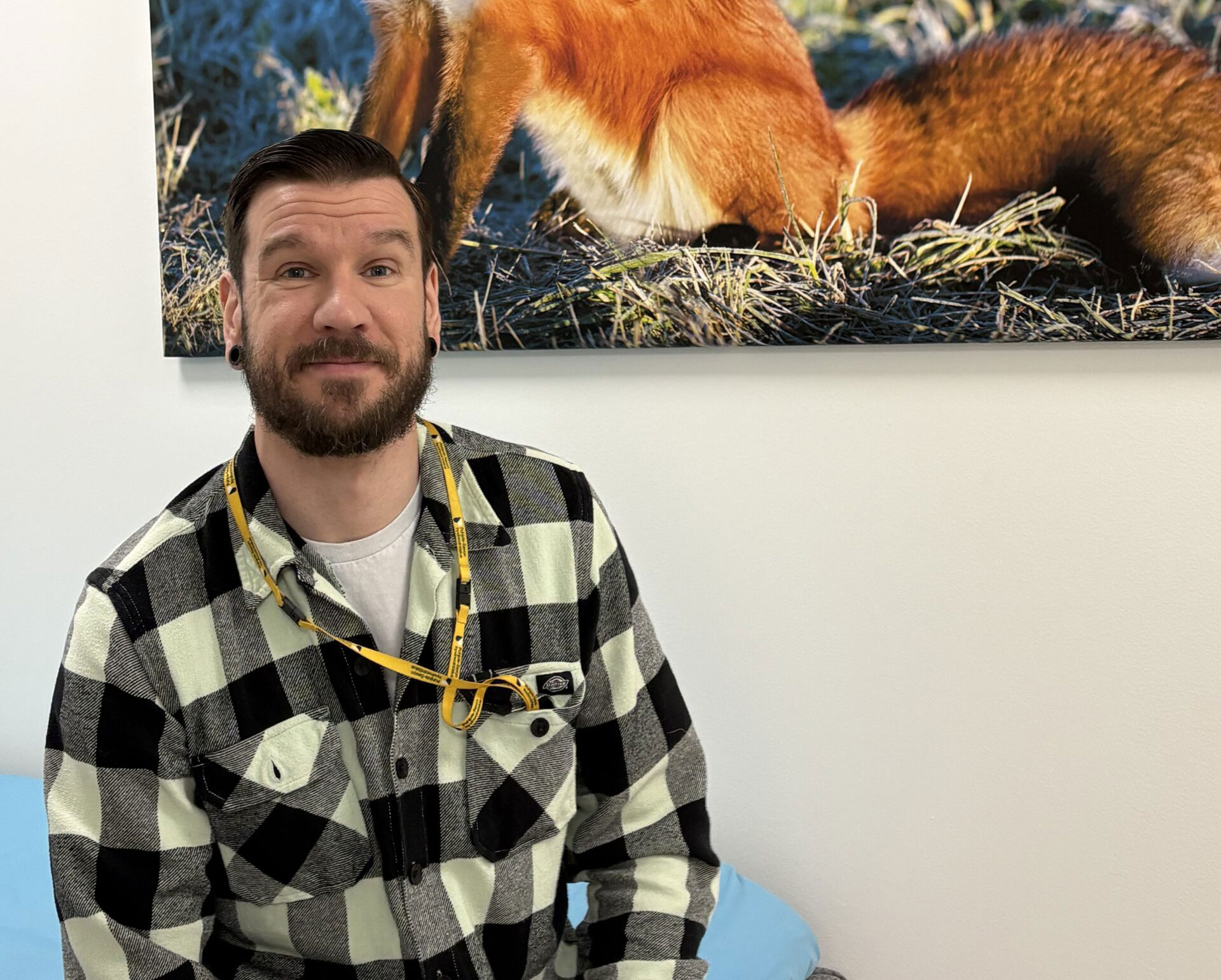
Samu Kainulainen leads the SmartSleep Sleep Laboratory
Photo: Jane and Aatos Erkko Foundation
Our foundation visits different universities as part of an active dialogue with researchers and university leadership. At the same time, these visits provide an opportunity to explore the projects funded by the foundation. At the beginning of the year, our university tour took us to the University of Eastern Finland. On the Kuopio campus, we had the chance to stay overnight in the SmartSleep Sleep Laboratory and take part in sleep research.
On a freezing February evening, my colleague and I stepped into a dim university corridor. The bustle of the day had quieted down, but in the world-class sleep laboratory, the work shift was just beginning.
The sleep laboratory was established a few years ago when conducting clinical sleep research had become increasingly challenging. Research was carried out in hospital environments where space was limited, and the COVID-19 pandemic had made the situation even more difficult. As a solution, a sleep laboratory was built in 2022 in connection with the university.
“Our goal was to create an environment where sleep can be measured in controlled and systematically tailored conditions for research purposes,” says Samu Kainulainen, Director of the sleep laboratory and Associate Professor.
In 2024, the Jane and Aatos Erkko Foundation granted funding to Kainulainen’s research group to redefine sleep stages.
Studying healthy individuals is a key part of sleep research
We pass a laboratory room where preparations and measurements for the studies are conducted. Each participant stays in their own sleep room, resembling a hotel room, equipped with a comfortable adjustable bed, a few pieces of furniture, and soft lighting. Despite the homely atmosphere, the room is carefully designed for research purposes. There are no windows, and through a ceiling-mounted camera and monitoring equipment, healthcare staff observe the participant’s sleep and condition throughout the night.
We aim to better understand what healthy sleep looks like in individuals who never need to seek medical help for sleep problems”
Samu Kainulainen
The rooms are in active use. Different patient groups as well as healthy volunteers serving as controls have already spent over 500 nights in the sleep laboratory. Most sleep medicine research focuses on individuals who already have symptoms or a diagnosis, but this project takes the opposite approach.
“We aim to better understand what healthy sleep looks like in individuals who never need to seek medical help for sleep problems,” explains Kainulainen.
“A large dataset enables new kinds of comparisons. How does the sleep of healthy individuals differ from that of patients? How can these differences be reliably identified, and which comes first—disease or impaired sleep?” he continues.
The topic has attracted strong interest, and more than 1,000 healthy volunteers are already in line to participate in the studies.
A new way to measure sleep
Attaching various measuring devices in the evening takes about an hour and a half. Sensors are placed especially around the head and heart, and their positions are carefully measured. Sensors attached to the legs monitor nighttime movement, the neck measures vibrations caused by snoring, oxygen saturation is measured from the fingertip, and breathing is tracked using a nasal cannula. Finally, a mesh cap is placed on the head to keep the network of wires in place, and the cables are connected to a measuring device on the bedside table.
The most scientifically ambitious goal of the study relates to sleep classification. The current five-stage sleep model is based on a classification developed in the 1970s, even though technology has advanced enormously since then. Digital measurement methods and artificial intelligence now enable much more precise analysis.
“We want to develop a new model based on measurement data that describes sleep in greater detail than before. Success could have wide-ranging impacts on medicine—from intensive care to drug development and the treatment of chronic diseases,” says Kainulainen.
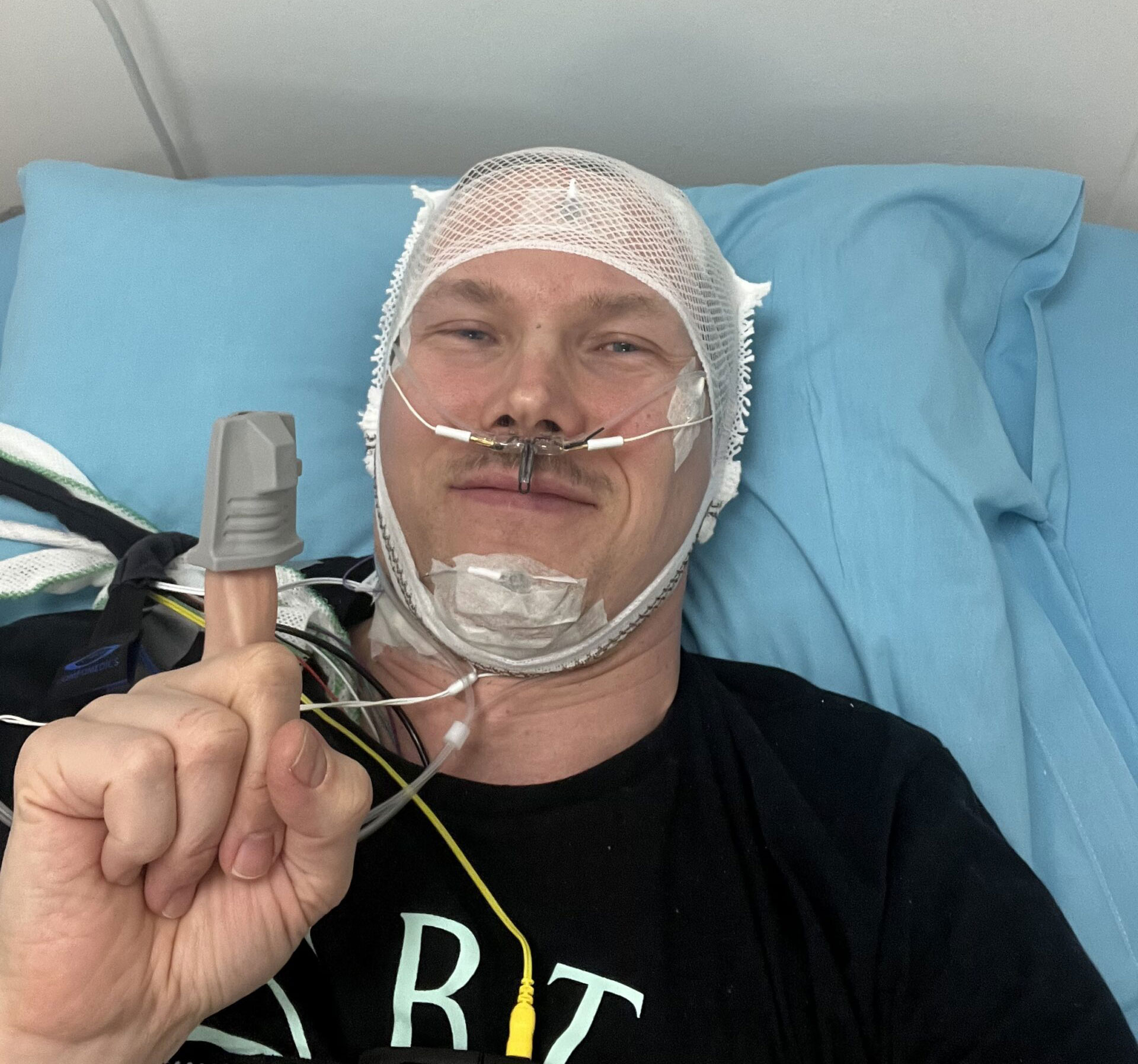
A colleague hooked up to monitors and ready for sleep
Photo: Jane and Aatos Erkko Foundation
Sleeping Under Observation
Although one might wonder in advance how it is possible to fall asleep with wires attached to the head and a camera monitoring every movement, the night passes peacefully. The wires do not restrict movement, the room is quiet, and I sleep soundly until morning—the measurement data also confirms restful sleep.
In the morning, I fumble for the call button when research nurse Mika Hiltunen enters the room. The day starts briskly with blood tests and blood pressure measurements even before getting out of bed. Various research packages are conducted in the sleep laboratory, and we also have our body composition measured to assess overall health. In addition to scientific articles, part of the data will be published in anonymized form according to open science principles.
Research explores the link between sleep and inflammatory diseases
Research conducted at the SmartSleep Laboratory will provide new insights in the future, for example into the relationship between sleep and inflammatory diseases and the progression of illness.
“For example, in inflammatory bowel diseases and osteoarthritis, we examine how inflammation and sleep affect each other. Is poor sleep a consequence of inflammation, or does deteriorating sleep worsen the inflammatory response? The aim is to open new treatment possibilities through basic research and to explore whether improving sleep quality could shorten inflammatory episodes or support recovery,” Kainulainen explains.
If we succeed, in the future there will be fewer families in Eastern Finland where heart disease takes a father too early”
Samu Kainulainen
Sleep is a key part of good heart health
The research also has strong regional and national significance. Northern Savonia is one of the regions in Finland with the highest rates of heart disease. Coronary artery disease, high blood pressure, and high cholesterol are common in the area. These are very often accompanied by undiagnosed sleep apnea. It is estimated that up to 1.5 million Finnish adults suffer from sleep apnea—many without knowing it.
“In the project, we are developing methods to make it easier to detect sleep apnea and sleep disorders. One key goal is to utilize ECG data in assessing sleep quality. If sleep disorders could be detected during cardiac examinations, treatment could begin at an early stage, before the disease progresses to a severe level,” says Kainulainen.
Fewer children growing up without fathers
One of the societal goals of the project is to improve the identification and treatment of sleep disorders, especially in connection with cardiovascular diseases.
“At best, this means that sleep apnea is detected in time, serious cardiac events can be prevented, and heart diseases can be treated more comprehensively. If we succeed, in the future there will be fewer families in Eastern Finland where heart disease takes a father too early,” Kainulainen concludes.