Vuosi
2025
Annual Report and Profit Statement
The Jane and Aatos Erkko Foundation’s primary goal is to promote and support research and teaching in the fields of technology, economics and medicine. Another goal is to promote arts and culture as well as sports and physical education and wellbeing in the interests of the Finnish nation.
Foundation
The Jane and Aatos Erkko Foundation fulfills its mission by supporting high-quality, internationally competitive science, art, and culture as well as other societal activities. Scientific grants are primarily allocated to medicine and technology as well as to natural sciences and economics supporting the aforementioned fields and selectively to other fields of science. The Foundation does not single out any specific priorities or themes for its grant activities in the field of art or science.
Grants are primarily awarded to working groups and organizations with demonstrated ability or potential to renew their field. When making grant decisions, attention is paid to the quality of the project’s content, its significance for the industry, and the feasibility of the plan.
The Foundation also has a Proof of Concept grant for projects that contain promising or preliminary ideas. If successful, such projects can lead to new scientific discoveries, for example, or they can provide a resource for testing new, more sustainable practices.
External experts are consulted in the preparation of decision proposals, and they also participate in other development work promoting the Foundation’s grant activities. Due consideration is given to the areas of interest and wishes expressed by the founders within the limits imposed by the Foundation Charter.
The primary goal of the Foundation’s investment activities is to preserve and increase the real value of its assets in the long term. The investment strategy is equity-heavy. The goals include stable cash flow and sufficient liquidity to ensure the continuity of core activities. Short-term price fluctuations do not have a steering impact on the Foundation. All grant decisions are made with due regard to the Foundation’s financial position. Grants are disbursed three times a year (January, May and September).
The Foundation’s operating principles include interaction and flexibility as well as the active development of the Foundation’s work. The Foundation operates responsibly in all areas of its operations.
Fulfillment of the Foundation’s mission
During the year, the Foundation awarded grants of EUR 38.4 million (EUR 46.3 million in 2024) to science, art, and culture.
EUR 32.5 million (EUR 31.9M) was awarded to science, which is 84.6% (68.9%) of the total grant amount for the year. Medicine received EUR 15.5 million (19.7m). Technology grants amounted to EUR 14.4 million (11.8m). Other science grants amounted to EUR 2.5 million (EUR 0.4m). The medicine and technology grants also include projects related to natural sciences.
EUR 4.1 million (EUR 14.3m) was allocated to arts and culture projects, which accounted for 10.7% (30.9%) of the total of grants awarded during the year. EUR 1.8 million (EUR 0.1m) was awarded to other societal activities.
The approval rate of all grant applications was 9.4% (12.7%). In terms of euros, the approval rate was 18.1% (20.1%). Extensive projects (long-term, high impact projects of EUR 1 million or more) accounted for 31.3% (23.8%) of the year’s grants.
During the year, the Foundation awarded grants of EUR 38.4 million to science, art, and culture.
The Foundation has no specific application periods and applications are processed throughout the year. The number of applications processed during the year (510) increased by 3% relative to the previous year (495). The Foundation continued the processing of science applications with the rotation of reviewing the medical projects for the March and September and technology projects for the May and December board meetings. Applications related to other scientific disciplines and culture projects continued to be reviewed at all board meetings.
The processing of applications took into account issues of disqualification and the impact of any conflicts of interest on preparation and decision-making.
The approval rate of all grant applications was 9.4%.
The current state of economic research in relation to the Foundation’s grant policy was also reviewed during the year. The study was carried out by the Foundation in 2024–2025. The final report was discussed by the Foundation’s Board of Directors in October 2025. The expansion potential of assistance for economics will be developed as part of the preparation of the next strategy period.
The return on investments in 2025, with due regard to unrealized changes in market values, was +9.7% (+13.0%). The Sanoma Plc shares returned +28.6 (+16.5%) and other investment assets +3.9% (+12.1%).
At the turn of the year, the market value of the Foundation’s assets totaled EUR 1,424 million (EUR 1,351m). Of this, equities accounted for 94.9 (93.5%) and fixed-income instruments 5.0% (6.4%).
The surplus for the 2025 financial year was EUR 0.3 million (surplus EUR 11.5m).
The Foundation’s grant activities
The Foundation has a continuous application process and no separate application periods or programs are in place. Grants for 2025 decreased by 17% year-on-year. The Foundation’s grant activities follow the application pressure, which explains the annual fluctuation. In some years, special projects significantly increase the total amount of grants.
In addition to its primary scientific disciplines, the Foundation has also supported other disciplines, such as natural sciences. The image on the next page illustrates the development of grants by discipline.
In addition to its primary scientific disciplines, the Foundation has also supported other disciplines. Projects in natural sciences, agriculture and forestry and other scientific disciplines with a clear connection to medicine or technology are mainly considered part of the Foundation’s grant activities in the fields of medicine and technology in the statistics. Similarly, projects that are further removed from the Foundation’s main disciplines are included in grant activities for other sciences.
Based on the discipline-related information reported by the applicant, 26% of the grants in 2025 (EUR 9.9 million in total) belonged to natural sciences. The total grant amount for natural sciences is included in the grants for medicine, technology, and other sciences in the figures of the Annual Report.
The Foundation awards grants primarily to working groups and organizations. Eligible projects may involve several fields of science or consist of consortia formed by several organizations or universities. The Foundation does not award personal grants for doctoral or post-doctoral projects. However, research within broader projects is usually carried out by early-stage researchers. Hence, the educational impact of the Foundation grants is significant in that they provide employment for doctoral and post-doc researchers.
During the year, grants were awarded to 48 working groups, organizations, or consortia (63 in 2024), totaling EUR 38.4 million (EUR 46.3 million). Of the approved applications, 36 (43) were for scientific research and 10 (18) for cultural projects. Two grants (2) were awarded for other societal activities.
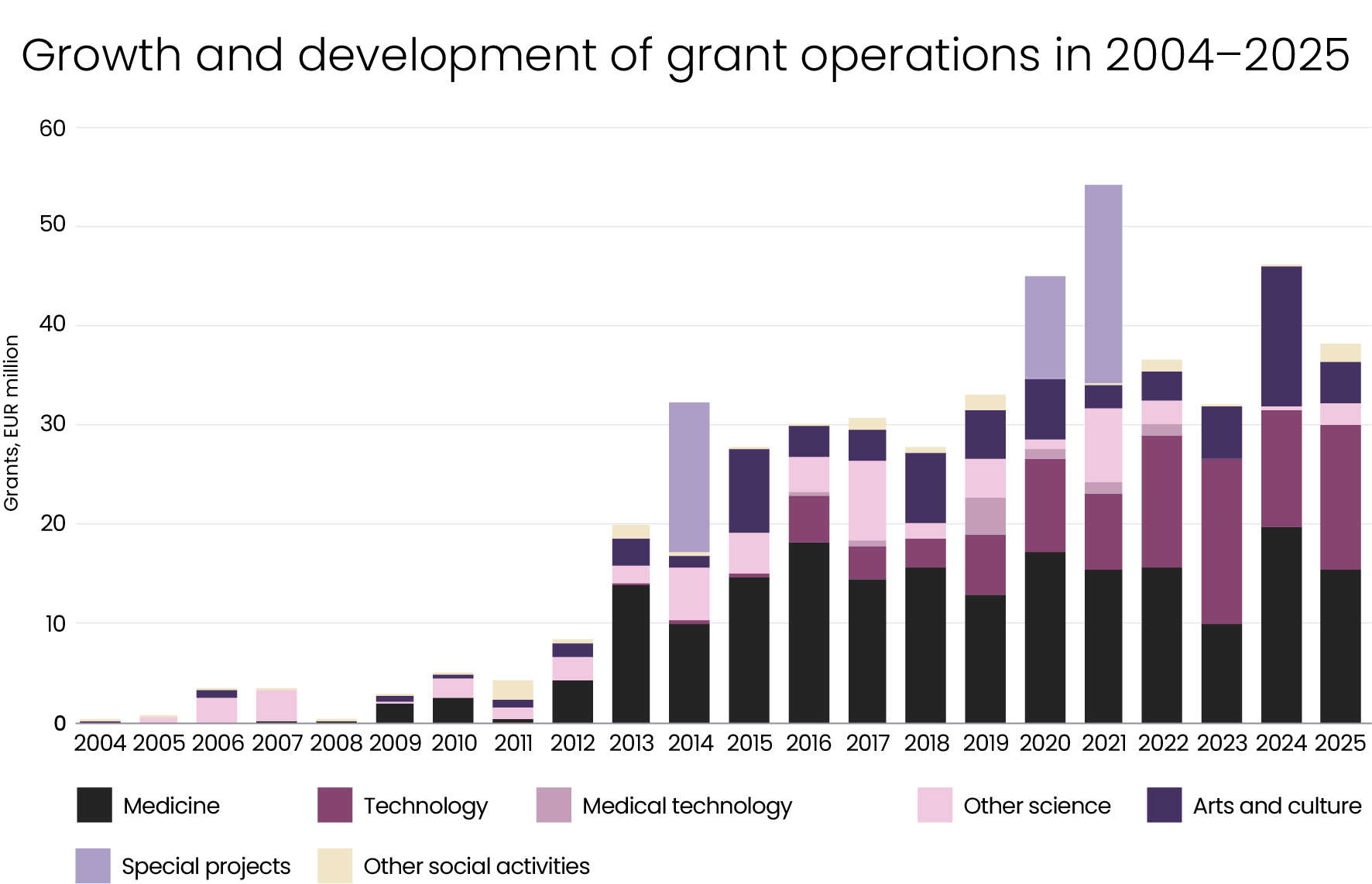
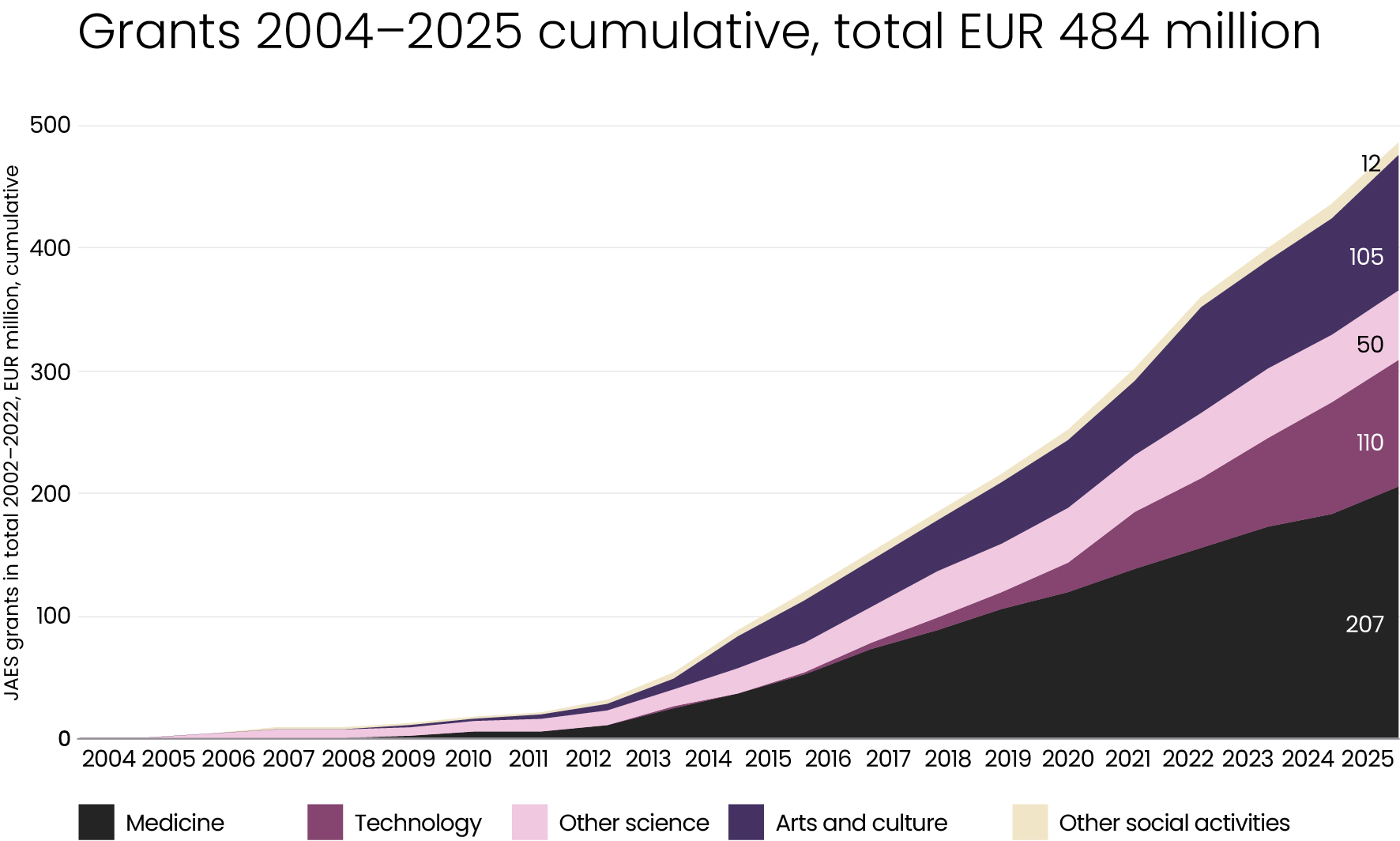
Most of the grants went to research teams at the University of Helsinki, Tampere University, and the University of Eastern Finland. Special emphasis was placed on medical technology, environmental science, biomedical sciences, physics, cancer diseases, and neurosciences in the disciplines receiving grants. In the arts and culture, dance and classical and contemporary music were emphasized.
A total of EUR 38.4 million in grants was awarded to 48 working groups, organizations, or consortia during the year.
A total of 15 (15) grants in excess of EUR 1 million were awarded for extensive multi-year projects and 18 (25) grants for projects with budgets ranging from EUR 500,000 to EUR 1,000,000. The median amount applied for increased compared to previous years in all disciplines supported by the Foundation. The median size of awarded grants was EUR 760,000 (EUR 650,000 in 2024).
The combined share of young team leaders and intermediate-stage researchers in the grants awarded by the Foundation, 43%, was slightly higher than their share in the total amount of applications received by the Foundation (40%).
When making grant decisions, special attention is paid to the younger generation of researchers in accordance with the Foundation’s strategic objectives.
The median amount applied for increased compared to previous years in all disciplines supported by the Foundation.
The Foundation has only compiled statistics on applicants’ career phase since 2023, so sufficiently extensive comparative data on the development of applications and grants by career stage will only be available after the 2024–2026 strategy period.
The figure shows the distribution of grants by career stage in 2025.
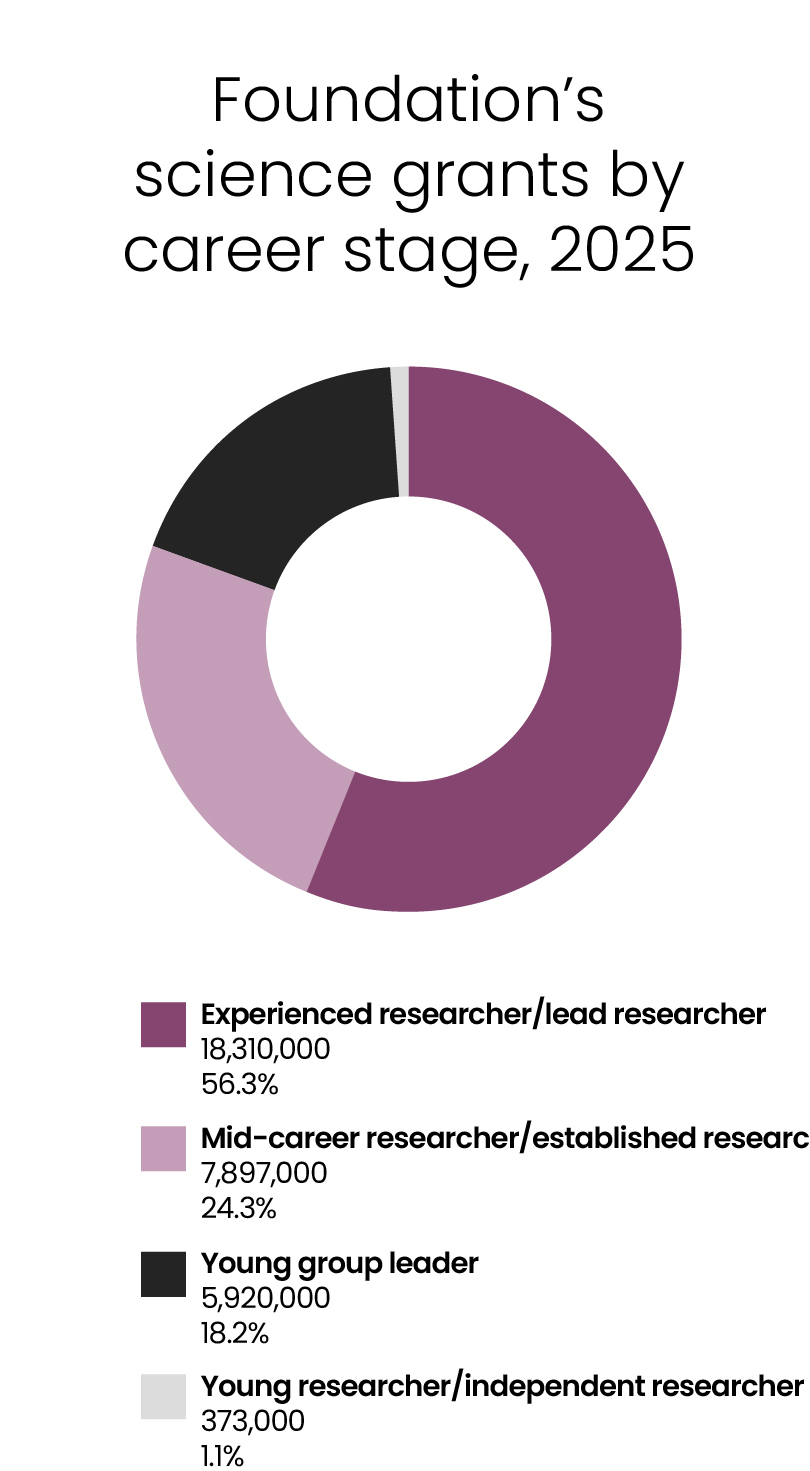
The attached image shows the distribution of grants by career stage in 2025.
Promotion of science
EUR 32.5 million (EUR 31.9M) was awarded to science, which is 84.6% (68.9%) of the total grant amount for the year. In accordance with the Foundation’s strategy, the grants were mainly allocated to research in medicine and technology as well as the natural sciences that enable and support them.
In terms of the number of applications, the share of technology reached the level of medicine. Key assessment criteria included the promotion of ‘high risk–high gain’ research, the broader relevance of the project as well as the quality and feasibility of the project plan.
Medicine
Of the grants awarded, EUR 15.5 million (EUR 19.7 million in 2024) was allocated to medicine. Medicine accounted for 37.5% of the number of grants and 40.4% of the amount of euros awarded. The University of Helsinki received 34.4% of all medical grants from the Foundation in 2024. The University of Helsinki’s share of medical applications was 33.4%.
Grants for medicine also included natural science projects that support medical research.
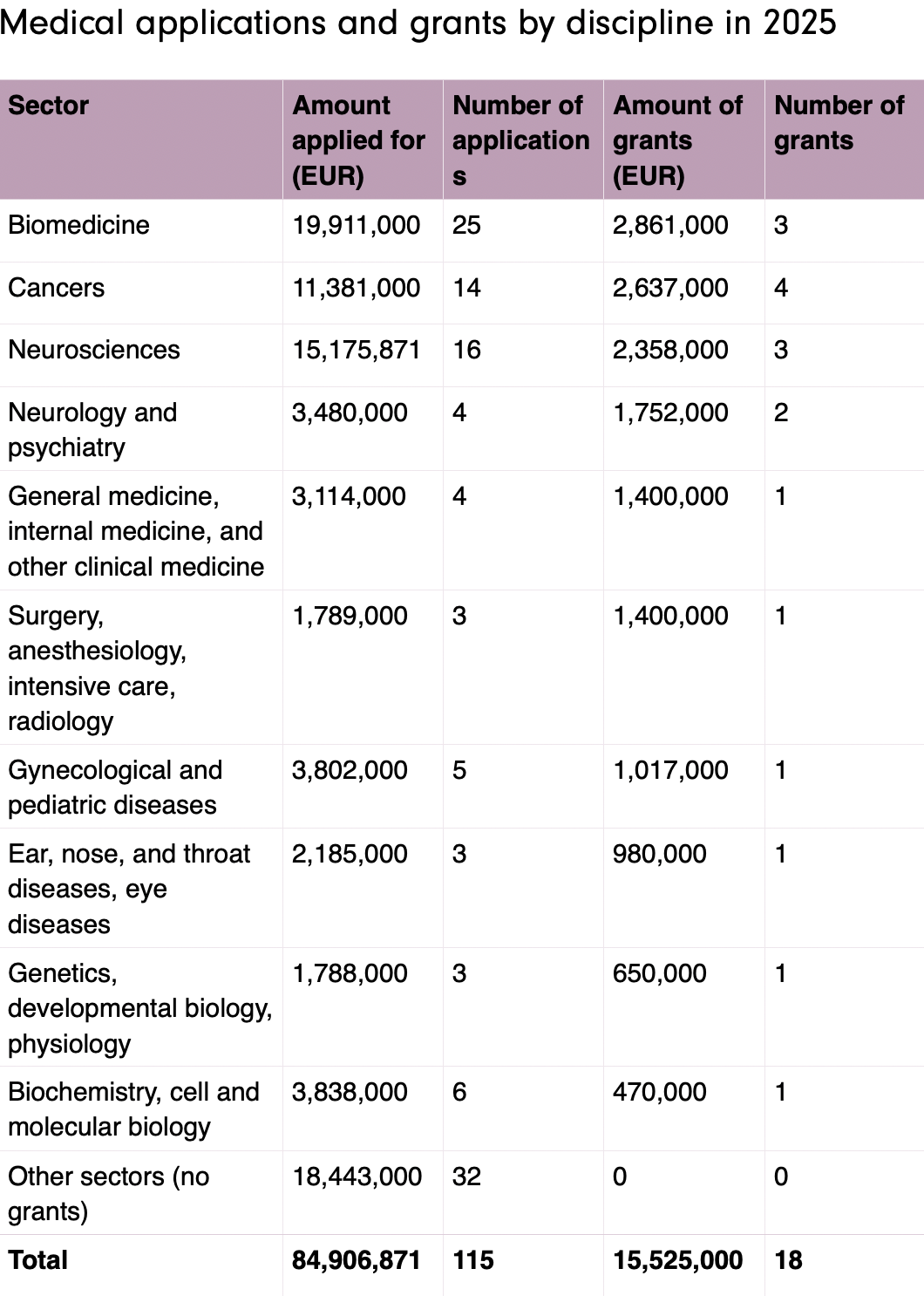
€15.5 million was awarded to medicine in 2025.
The largest grant for medical research during the year, EUR 1.6 million, was awarded to a consortium led by Professor Tarja Malmi of the University of Eastern Finland. The aim of the project is to identify markers that predict Alzheimer’s disease and to investigate the early mechanisms that lead to the disease. The strength of the consortium is its pioneering international research methods. The project also uses PET equipment at the University of Turku that enables research and diagnostics. The Foundation has previously supported the acquisition of this equipment.
As in the previous year, the highest number of applications and grants were allocated to biomedical sciences, neurosciences, and cancer research, both in terms of euros and in number of projects. In general, the level of medical applications was considered to be very high.
Several projects combined basic research with translational and clinical research. Strengthening research-based innovation activities was also highlighted, exemplified by a grant of approximately EUR 1.1 million awarded to the research group of two young group leaders, Associate Professor Heidi Haikala and Docent Ilkka Ilonen. The project studies why lung cancer treatments are losing their efficacy and how immune defenses affect the progression of the disease. A multidisciplinary consortium between the universities of Helsinki and Tampere is building a new kind of drug development platform that uses patient samples and advanced technology, such as machine learning. If successful, the project may revolutionize the development of cancer treatments, enable more individualized treatments and improve patients’ quality of life and prognosis. At the same time, it can reduce drug development costs and bring new and more effective drugs to patients more quickly.
Medicine accounted for 37.5% of the number of grants and 40.4% of the amount of euros awarded.
Technology
Of the grants awarded, EUR 11.8 million were allocated to technology, This represents 37.6% of the total sum awarded during the year. The University of Helsinki accounted for 44.2% and Aalto University for 15.5% of the technical grants in terms of euros.
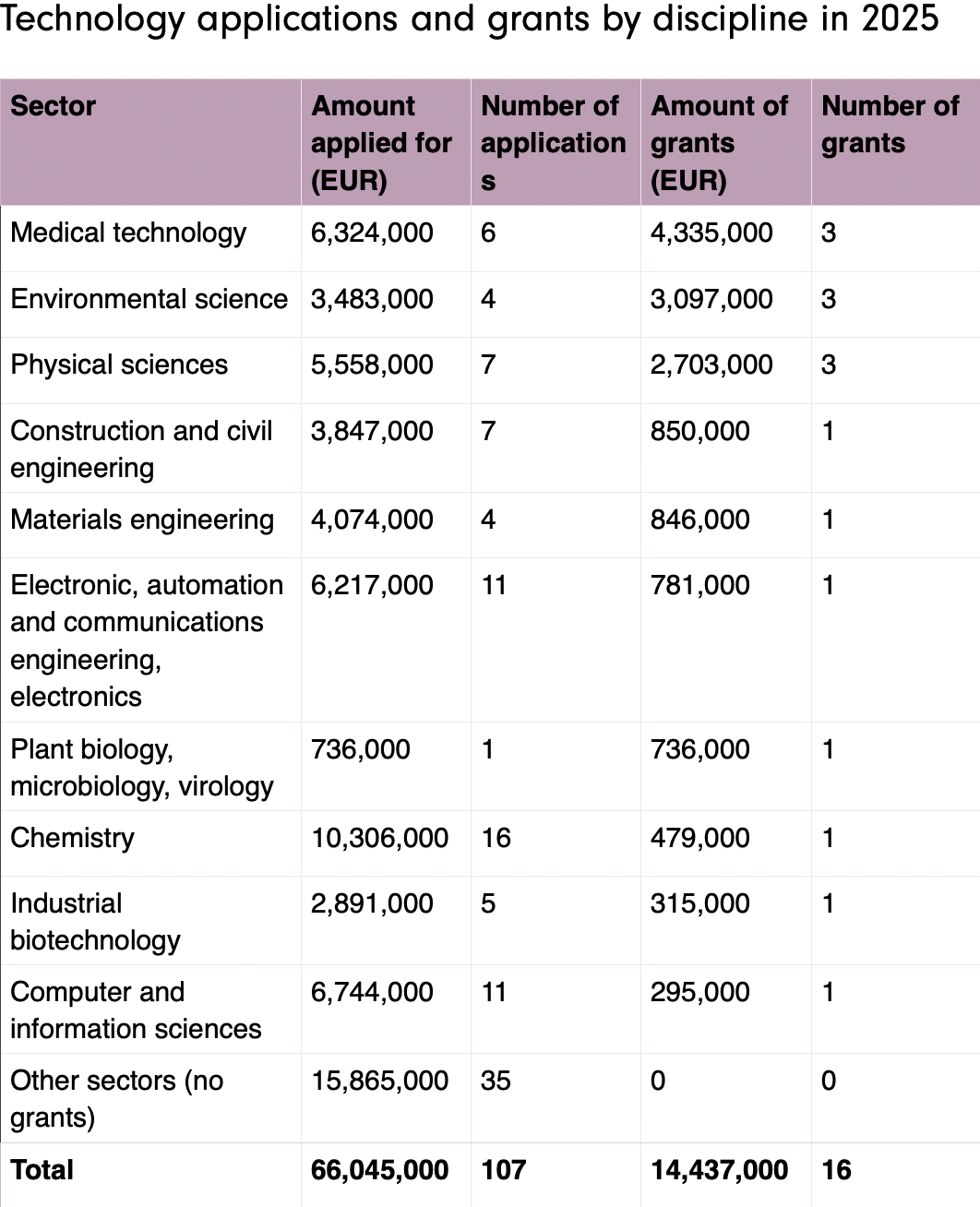
Of the grants awarded, €14.4 million was allocated to engineering and technology. This represented 37.6% of the total amount awarded for the year.
The technical research projects funded during the year particularly emphasized basic research, new technologies, and current societal themes. The fields of medical technology and chemistry received the most applications.
The largest technical research grant of the year, EUR 1.6 million, was awarded to the group of Associate Professor Isaac Afara for medical technology research. A joint project between the University of Eastern Finland and the University of Tampere studies individualized cartilage tissue engineering. In addition to Afara, the four-year project’s working group includes Professor Rami Korhonen and Professor Susanna Miettinen from the Faculty of Medicine and Health Technology at the University of Tampere.
Maarit Korpi-Lagg, Professor at Aalto University, has established a new field of science in Finland, astroinformatics. It is a multidisciplinary research field that combines astronomy with information technology methods. A grant of EUR 0.3 million was awarded to the Korpi-Lagg working group for modeling the magnetic fields of the sun. The aim is to develop a new kind of hybrid model that combines artificial intelligence and traditional simulations in order to enable observation of small- and large-scale phenomena in real time without massive amounts of data. The method would enable, for example, the modeling and analysis of solar magnetic fields, which would be particularly significant for predicting the operation of satellites and communications disturbances.
Of the grants awarded, EUR 11.8 million were allocated to technology, This represents 37.6% of the total sum awarded during the year.
Culture and other grant activities
EUR 4.1 million (EUR 14.3m) was allocated to arts and culture projects, which accounted for 10.7% (30.9%) of the total of grants awarded during the year. EUR 1.8 million (EUR 0.1m) was awarded to other societal activities. Culture-related applications accounted for 38.8% of the total in terms of number of applications, and approximately 15.6% in terms of euros.
Overarching themes included international approaches and operating models that renew competencies and activities. Key criteria in the evaluation included the skills and competence of the applicants as well as the feasibility and relevance of the projects to the sector involved.
The evaluation of the art and cultural grant policy continued during the year. The work focused on a sector review carried out via stakeholder discussions and a comparison of different international operating models in addition to the assessment of the Foundation’s own grant policy.
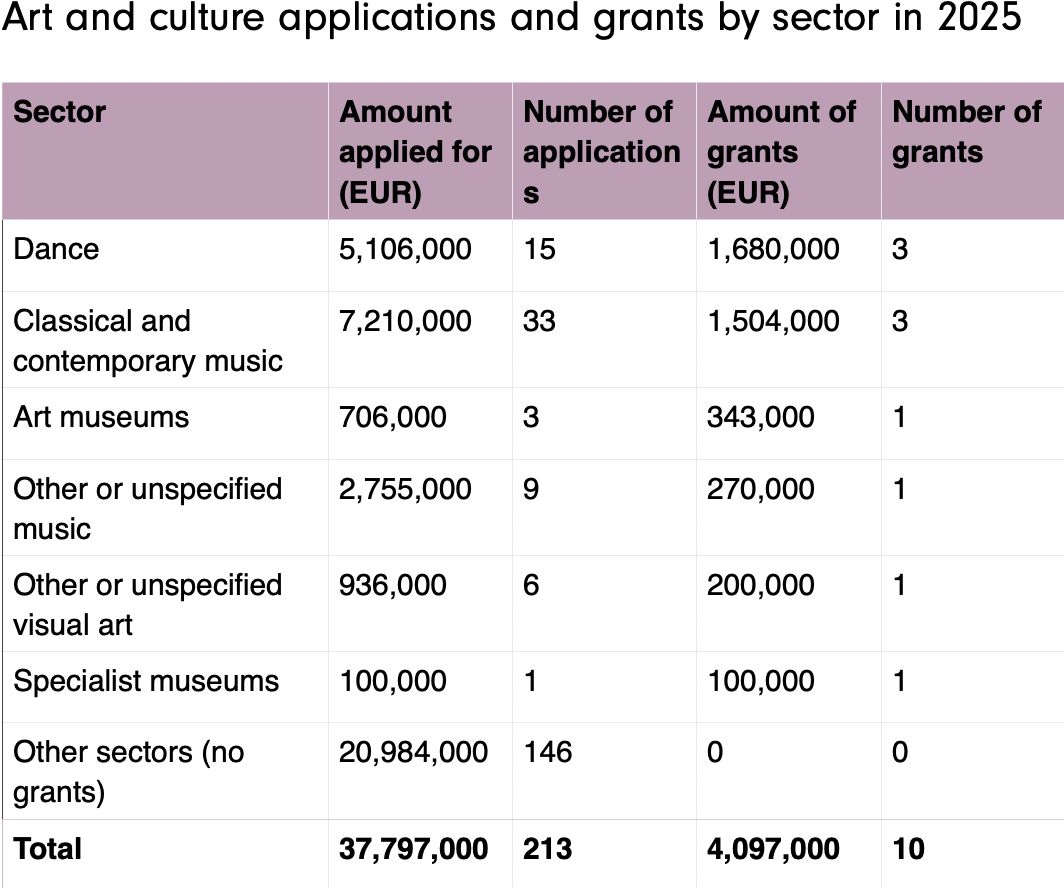
€4.1 million was awarded to arts and culture, representing 10.7% of the total grant amount for the year.
The Orchestra of the Future is a joint project between Vivo Symphony Orchestra for young people and Finnish professional orchestras, which aims to create the basis for future orchestral activities. A total of EUR 0.7 million was awarded for the three-year project. The grant continues the Foundation’s investment in promoting education in the field of classical music.
The Sports Museum Foundation of Finland was awarded further funding of EUR 0.1 million to expand the sports education experience of the TAHTO Center for Finnish Sports Culture. The pilot phase funded by the Foundation was very successful, and the follow-up project will take the concept to different cities.
EUR 4.1 million (EUR 14.3m) was awarded to arts and culture projects, which accounted for 10.7% of the total of grants awarded during the year.
Other science
The Foundation awarded a total of EUR 2.5 million (0.4 million in 2024) to projects in disciplines other than medicine and technology, including natural sciences. There were two grants in total. Other sciences accounted for 4.2% of the number of grants awarded and 6.6% of the amount awarded.
Children’s lack of physical activity is a growing social problem, the root causes of which the foundation has started to solve via good network cooperation. During the year, the Foundation awarded a grant of EUR 1.1 million to a group led by Professor Timo Jaakkola and Associate Professor Mikko Huhtiniemi for a study that seeks scientifically proven ways to increase exercise among children and young people in schools. The aim is to build a science-based toolkit for schools’ daily operations and to use the results in training provided to physical education and class teachers. In addition to changing schools’ operating culture, the study also affects teacher training and the way children exercise in schools around Finland.
In 2020, Kati Hanhineva started as the Professor of Food Sciences at the University of Turku in a professorship donated by the Foundation. The professorship specializes in Nordic foods and their health effects. In 2020, the Foundation awarded four-year project funding for research, thus enabling the creation of a new area of research. During the year of operation, the Foundation awarded Hanhineva’s research group a four-year follow-up grant to examine the metabolic effects of plant-based products.
Other sciences accounted for 4.2% of the number of grants awarded and 6.6% of the amount awarded.
The current transformation of food systems requires plant-based, responsibly produced and healthy products. However, the manufacturing methods of these products can significantly alter the original plant materials.
Economics
Economics is one of the three disciplines the research and teaching of which the Foundation aims to promote and support as its primary purpose. Compared to the other two disciplines, medicine and technology, the number of competitive applications and grants in economics has been modest.
As part of the Foundation’s strategy for 2024–2026, the Foundation’s Board of Directors decided to survey what could be a natural role for the Foundation to assist economic research and to investigate the funding situation of economic research. The survey was discussed by the Foundation’s Board of Directors in October 2025.
The survey was carried out as part of the Foundation’s own work and based on the Foundation’s needs. The material consisted of a total of 29 interviews with experts in economics, the Foundation’s application data and statistical and qualitative data related to the field collected from various sources.
The core message of the report on the state of the sector is as follows: Economics is currently an academically high-level but small discipline in Finland. The quality of research projects has risen to an international level, and Finland succeeds in attracting young research talent from around the world.
In the coming decades, economics will be able to increase its significance, size, and the impact of research projects on the surrounding society.
The review of grants in the field of economics will continue as part of the preparations for the next strategy period. According to the report, increasing the number of competitive, internationally high-quality applications requires measures in terms of communications and stakeholder cooperation.
It is possible for the Foundation to launch active and goal-oriented grant activities that take into account the Foundation’s allocation funds, grant criteria, and strategic priorities.
Overview of the projects completed in the reporting period
During the year, the Foundation received a final report from a total of 53 (2024: 63) projects: 20 medical projects (EUR 18.6 million), 18 technical projects (EUR 10.6 million), and 15 art and culture projects (EUR 6.7 million). The median duration of the projects was approximately 3 years. A total of 142 doctoral researchers worked on these projects, which reflects the strong educational value of the funding.
The usability of the final reports was further developed. Among other aspects, the parties carrying out the projects were asked to assess the impacts of the research or activities on their field in more detail by selecting the most important (3) statements from the following: 1. renew the field in question and its practices, 2. promote the researchers’ career development, 3. promote the career development of the working group, 4. promote the applicant’s recognition, 5. promote generational change in the filed, 6. promote domestic and international cooperation, 7. promote the acquisition of new funding, 8. promote product development, or 9. promote cross-disciplinarity.
Among the projects completed during the year of operation, the most important of these factors was the renewal of the field in question and its practices. Longer-term projects provide the opportunity to progress in a deliberate and more focused manner, which supports both the participants’ career development and the creation of new ways of working. At the same time, cooperation networks will be strengthened both nationally and internationally. This improves the conditions for further work.
The building of Dance House Helsinki, a project previously funded by the Foundation, was highlighted in several completed projects (including Tanssikaari ry and Tero Saarinen Company). The diversified and extensive domestic and international offering has strengthened the significance of Dance House Helsinki as a Finnish cultural institution that has found its audience.
The reports also highlight general concerns in the field, such as weakened public funding, which may lead to more focused funding through different trends and programs. Strong interests of the pharmaceutical industry, for example, were perceived to shape the research directions and focal points. This means that independent support from foundations is a vital condition for many research groups.
Finances of the Foundation
The Foundation’s assets have accumulated gradually following the infusion of the initial capital by the founders in 2002 and substantial testamentary bequests received in 2012 and 2014, as well as an increase in the value of assets.
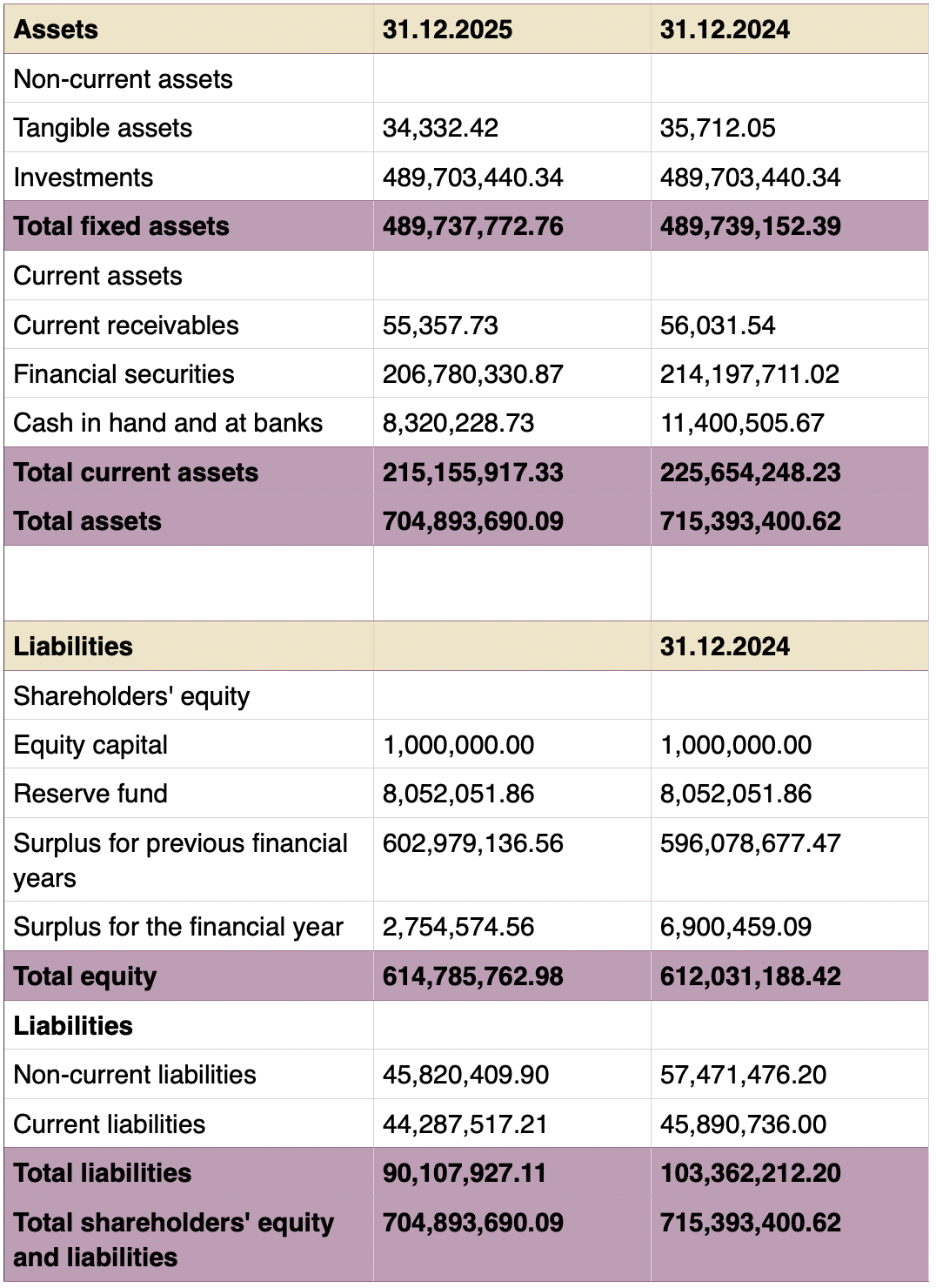
At the end of the year, the market capitalization of the Foundation’s assets stood at EUR 1,424 million (2024: EUR 1,351m) and it consisted of a securities portfolio of EUR 294 million held directly by the Foundation (EUR 298m); shares held in Sanoma Plc valued at EUR 378 million (EUR 305m); housing company shares valued at EUR 1 million (EUR 1m); Asipex Group’s securities portfolio of EUR 751 million (EUR 747m). The Foundation’s wholly owned company Oy Asipex Ab is domiciled in Helsinki and it has a wholly owned Swiss subsidiary Asipex AG. By the end of the year, the Foundation had approved but not yet disbursed grants in the amount of EUR 90.0 million (EUR 103.3m).
At the end of the year, the market capitalization of the Foundation’s assets stood at EUR 1,424 million.
As the investment horizon is long, the investment strategy is equity-heavy. At the turn of the year, equities accounted for 94.9% (93.5%), fixed-income investments 5.0% (6.4%), and housing company shares 0.1% (0.1%) of the Foundation’s total assets.
Of the diversified equity portfolio (excluding Sanoma shares), 86% were direct large cap equities and 14% small cap funds. Geographically, Europe accounted for 49%, the United States for 38%, Finland for 6%, Japan for 3%, and other countries for 3%. The quality-oriented and liquid global equity portfolio is also well diversified by sector and company, with the largest individual investments representing approximately 3% of the equity portfolio.
Group
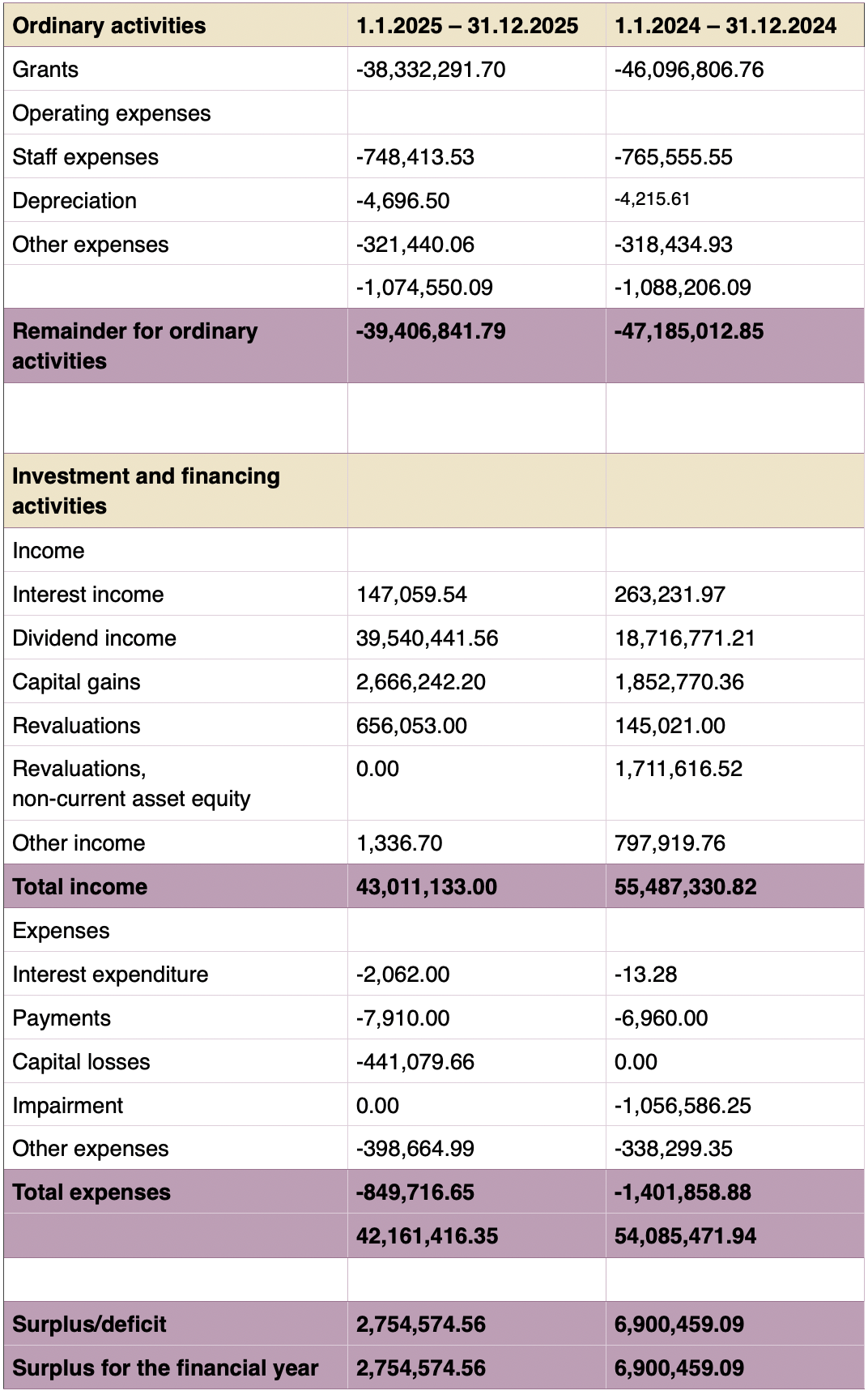
The operational deficit was EUR 39.4 million (2024: EUR 47.2m). Grants awarded during the year amounted to EUR 38.4 million (EUR 46.3m). Grants recorded for 2025 were EUR 38.3 million (EUR 46.1m). The difference between awarded and recorded grants is due to the return of unused grants and cancellations. Other operating expenses were EUR 1.1 million (EUR 1.1m).
The accounting return on investments owned by the Foundation was EUR 39.1 million (EUR 58.7m). Of this, the subsidiary group’s net income was EUR 16.9 million (EUR 36.6m), dividend income from shares EUR 18.4 million (EUR 17.6m), revaluations of shares and fund units EUR 0.7 million (revaluations EUR 0.8m), sales proceeds on investments EUR 2.2 million (EUR 1.9m), fund profit participations EUR 1.1 million (EUR 1.2m), interest income and expenses EUR 0.1 million (EUR 0.3m), and other financial income and expenses EUR -0.4 million (EUR 0.5m). The deficit for the 2025 financial year was EUR -0.3 million (surplus EUR 11.5m).
Parent foundation
The surplus of the parent foundation for the financial year 2025 was EUR 2.8 million (2024: surplus EUR 6.9m).
The year 2025 will be remembered in the financial markets as an exceptional year of “everything goes up”, and the equity market in particular had a strong upward trending year, marked by excitement regarding artificial intelligence, the new US trade policy, and the significant weakening of the dollar. It is also worth noting that the price of gold also rose sharply (+63%) simultaneously with the strong equity market.
The market coped with the uncertainty early in the year and the historic import tariffs imposed by the Trump administration caused less damage than expected, after most countries refrained from countermeasures, although the MSCI World index, measured in euros, fell by nearly 20% from its peak in February to the low-point in mid-April. Towards the end of the year, however, the focus shifted towards stimulatory fiscal and monetary policy, and global economic growth remained stable at approximately 3.2 per cent.
Of the equity markets, Finland stood out, with the OMX Helsinki CAP index rising by well over 30% (after three years of decline). The MSCI Emerging Markets index, which tracks emerging markets, and the MSCI Europe index, which represents the European equity market, both achieved a total return of nearly 20%, calculated in euros. The S&P 500 index returned nearly 20% for the third consecutive year, but in terms of euros, the return remained at around
5% as the dollar weakened by around 12% against the euro.
The price increase was driven by both higher valuation levels and higher earnings in the United States, but in Europe and Finland it was specifically driven by higher valuation levels, as earnings stagnated or declined slightly. As in the previous year, the price increases in equity indices were narrow and the key factors of earnings were “banks, tanks, and artificial intelligence”.
The return on the Foundation Group’s investments in 2025, with due regard to unrealised changes in market values, was +9.7% (+13.0%), and the diversified equity portfolio (excluding Sanoma shares) returned +4.7% (+13.4%). The absolute return of the diversified equity portfolio (excluding Sanoma shares) was reduced by the significant weakening of the dollar and the relative return remained on a narrow base due to the overall market return, clearly declining when calculated with a geographical allocation similar to comparison indices.
period, the ten-year total return on the Foundation’s diversified equity investments was excellent, approximately 8% p.a. (9% p.a.). The Foundation’s annual returns can vary significantly due to the high weight of stocks in the portfolio.
The return on the Foundation Group’s investments in 2025, considering unrealised changes in market values, was +9.7%.
The Foundation holds 39,820,286 shares in Sanoma Plc, representing 24.35% of the aggregate of shares and voting rights in the company. The total return on Sanoma Plc shares inclusive of unrealised changes in value was +28.6% (2024: +16.5%). The dividend yield from Sanoma Plc to the Foundation in 2025 was EUR 15.5 million (EUR 14.7m).
The Foundation looks at sustainability in three key areas: grants, good governance, and investment activities.
The Foundation’s core activity of awarding grants is, in principle, responsible, as the grants promote a sustainable future in a diverse manner. Responsible grant operations are based on the Foundation’s clear purpose, uniform and transparent assessment criteria, and the objective and reliable processing of applications.
Good governance and a functioning work community lay the foundation for the Foundation’s sustainable work. Operations are developed consistently, and the key development steps during the year focused in particular on data management, stakeholder cooperation, and proactive risk management, which will be discussed in more detail during 2026. Together, they support transparent decision-making, the continuity of operations, and the achievement of the Foundation’s purpose.
The Foundation implements sustainability in its investment operations by taking into account environmental, social, and good governance aspects in addition to financial factors in its investment decisions. The Foundation’s Board approves the principles of responsible investing annually as part of the investment policy. External analysis tools and international sustainability frameworks are used to support investment activities.
The Foundation avoids investing in companies whose business activities are significantly related to alcohol, tobacco, recreational cannabis products or gambling. The Foundation may invest in companies that manufacture weapons only if they are headquartered in a NATO member state and do not manufacture controversial weapons such as nuclear weapons, cluster bombs, anti-personnel mines, and chemical and biological weapons.
The Foundation regularly monitors the development of the portfolio’s responsibility and a broad responsibility analysis of the portfolio is conducted annually in collaboration with a partner. According to the analysis, the sustainability of the Foundation’s investment portfolio was at or above the level of the benchmark index (MSCI World) in most operational indicators. The carbon footprint of the investment portfolio (excluding Sanoma) was 13% lower than the benchmark.
Risk management
The Foundation operates on the strength of its investment assets, and its core activities are well established. In risk management, the foundation emphasises good and transparent governance and clear internal processes. The most significant risks are related to the management of investment assets and market risk, the price and anchor ownership risk of Sanoma Plc shares, and potential reputational risks in grant activities.
Regular evaluation and, if necessary, updating of core processes, operational methods and job descriptions address the needs of a changing society and reduce the vulnerabilities of a small organization.
The primary goal of the Foundation’s investment activities is to maintain and increase the real value of assets over the long term. Other investment goals include stable cash flow and sufficient liquidity to ensure the continuity of core activities. With a long investment horizon, the investment strategy is equity-heavy (the equity weight was 94.9% at the end of the year), and the investment portfolio is generally not hedged.
Short-term price fluctuations do not have a steering impact on the Foundation, as it aims for good real returns and cash flow over the long term. Annual returns typically vary significantly.
In line with the investment strategy, investments are diversified geographically, by industry, by company and by currency. Investments are primarily in liquid securities and funds, which can be quickly converted into cash, resulting in very low financial and liquidity risk for the Foundation. ESG factors are considered as part of investment activities and risk management. A broad responsibility analysis of the investment portfolio is conducted annually with a partner.
The domestic and international economic situation affects the foundation’s investments. The risks of investment activities are mainly related to general market risk, i.e., the long-term development of international stock markets and dividend income.
Additionally, about 27% of the Foundation’s assets consist of Sanoma Plc shares, which represent the largest single price risk.
The management of cash assets and investment activities is carried out in accordance with the investment policy approved by the Board, and matters related to investment activities are handled by the Foundation’s Financial Committee.
The investment activities and risk management of the Asipex Group follow the investment policy approved by the company’s Board, which is in line with the investment policy of the Jane and Aatos Erkko Foundation described above.
Communications
Communications are used to share information about the Foundation’s objectives and practices related to applying for and awarding grants. This helps the work of the applicants and the various parties that implement the projects. In addition, the Foundation monitors and analyses changes in the operating environment in collaboration with stakeholders and communicates the impacts of the changes on the Foundation’s priorities, criteria, and grant choices. Communications are also used to provide visibility to the Foundation’s impact and the kind of development it creates in the longer term.
Advice and customer service as well as stakeholder-specific meetings and presentations are an important part of the Foundation’s communications. Quarterly newsletters include more extensive articles that showcase topical themes of grant activities and make the work of grant recipients visible. In addition, the Foundation actively promotes the visibility of projects in its partners’ communication channels. Communications are guided by interactivity, flexibility, and the continuous development of work.
The Foundation monitors and analyses changes in the operating environment in collaboration with stakeholders and communicates the impacts of the changes on the Foundation’s priorities, criteria, and grant choices.
During the year, a stakeholder analysis was carried out with the aim of forming an overview of the operating environment and its impacts on the Foundation’s strategy, operations, and future. In addition, stakeholders’ perceptions were analyzed and the Foundation’s identity and its position in society and the research field were examined. The analysis was carried out in the spring of 2025 and it included a written survey of parties that had applied for grants during the last three years along with qualitative interviews with selected stakeholder representatives.
In 2025, we visited the universities of Jyväskylä, Oulu, and Eastern Finland to deepen our cooperation and get to know their operations more extensively. There were also other networking opportunities, such as a university meeting coordinated by the Association of Finnish Foundations at the Svenska Handelshögskolan and at events organised by project parties around Finland. The information gathered during the events helps identify the developments in science and arts more broadly, provides better understanding of the parties’ daily operations and highlights the impact of grant activities.
The Foundation actively participated in the preparations for the Nordic Foundation Conference held in Helsinki on September 25–26, 2025. The organization was coordinated by the Finnish Cultural Foundation and the Swedish Cultural Foundation in Finland. The event was a great success with a record number of participants, 205 people.
Data protection and document management
When submitting applications for funding or reports to the Jane and Aatos Erkko Foundation, the applicants and grantees disclose personal information on themselves and potentially other members of their team, which creates a personal data file to be managed by the Foundation.
The Foundation has used its best efforts to put in place a transparent procedure in which the rights of the applicants and grantees are duly taken into account in all respects as required by the legislation and regulations on data protection.
Administration
The Annual General Meeting held on March 31, 2025, appointed Nils Ittonen Chair of the Board and Juhani Mäkinen Deputy Chair.
Marianne Heikkilä, Mikko Mursula, Jussi Pesonen, Sari Pohjonen, Outi Vaarala, Anna Valtonen, and Antti Vasara were appointed members of the Board. The Board of Directors of the Foundation elected a deputy member Riikka Rannikko at the meeting held on September 26, 2025. The deputy member participates in the Board meetings.
The term of every Board member ends at the following General Annual Meeting. No member or deputy member can be elected to the Board of Directors if they have reached the age of 75 or reach it during their term of office.
The Board convened five times during the reporting period. Foundation matters are also processed outside meetings.
At the General Annual Meeting, the Board appointed Mikko Mursula Chair of the Financial Committee with Nils Ittonen, Hanna-Mari Peltomäki and Karl Tujulin appointed members.
The Financial Committee monitors the general development of the financial markets and the economy and, for its part, ensures that the Foundation’s investment activities comply with the investment strategy approved by the Board of Directors. The Financial Committee convened four times during the reporting period.
At the General Annual Meeting, the Board appointed Nils Ittonen Chair of the Working Committee, while Juhani Mäkinen and Hanna-Mari Peltomäki were appointed members.
The Working Committee prepares matters for presentation to the Board. The Working Committee convened four times during the reporting period.
At the General Annual Meeting, the Board appointed Antti Vasara Chair of the Expert Committee, while Nils Ittonen and Hanna-Mari Peltomäki were appointed members. Experts are convened when necessary to deal with the matters to be addressed. The matters presented to the Expert Committee are prepared by teams of specialists appointed for the specific fields. The names of the experts are not disclosed.
A key success factor of the Foundation is a high-quality evaluation process based on peer review. The reviewers are experts from various fields, and they also contribute to other developmental work that promotes the foundation’s grant activities. The Foundation appoints experts for each strategic period. The names of the experts are not disclosed. Any disqualifying factors are taken into account in the review.
The Jane and Aatos Erkko Foundation is a member of the Association of Finnish Foundations. The purpose of the Association is to look after the common interests of Finnish grant foundations, funds and societies as well as to promote and develop corporate governance practices and professional skills.
Secretary-General Hanna-Mari Peltomäki served on the Board of the Association of Finnish Foundations (2023–2025). Peltomäki was elected to the Board of Directors for the second term (2026-28) in November 2025. Peltomäki is the Chairman of the Association’s social affairs committee.
The Foundation has played a significant role in a project to develop uniform data collection from foundations, launched by the Association of Finnish Foundations in autumn 2024. Based on the results of the pilot project carried out in 2025, the aim is to implement the data collection model for all of the association’s members.
During the reporting period, the Foundation employed an average of eight people of whom four worked for the subsidiary group. The key success drivers in the Foundation’s operations are a qualified and motivated staff, a committed Board and an extensive high-quality network of partners.
Related party transactions
During the fiscal year, the Foundation’s Board fees were EUR 218,700, and the Secretary General’s taxable salary was EUR 134,938. Board members have received monthly fees and meeting fees for Board and committee work.
The monthly fee for the Chair of the Board was EUR 2,000, and for members, EUR 1,500. Meeting fees for the Chairs of the Board and committees were EUR 600, and for members, EUR 500. Board members also work outside of meetings.
The Foundation has had no other remunerated or non-remunerated transactions with related parties besides the auditors’ fees. Moreover, the Foundation has not provided loans or guarantees to related parties.
Financial auditing
At its Annual General Meeting of March 31, 2024, the Foundation Board appointed PricewaterhouseCoopers Oy as the auditor of the Foundation’s accounts, with Tiina Puukkoniemi, APA, serving as the auditor-in-charge.
Activities in the current year
The operating year is the last of the strategy period, and during the year, the next strategy governing the Foundation’s grant operations will be prepared for a separately specified period. The preparation is supported by previous studies on the Foundation’s sustainability, the state of economics in Finland, and art and cultural grant activities, as well as experiences from technical and medical assistance activities.
During the year, the goals of scientific and artistic grants will be specified further. Cuts in public funding may increase the need to prioritize the targets of grant activities. We will also investigate whether the Foundation’s grant activities could play a stronger role than currently as an enabler of research-based innovations. We will continue the network cooperation related to children’s and young people’s exercise that has begun well and develop exercise grant activities in a goal-oriented manner.
We will maintain flexibility in the preparatory work with regard to new topical themes or special projects.
Income statement
Balance sheet